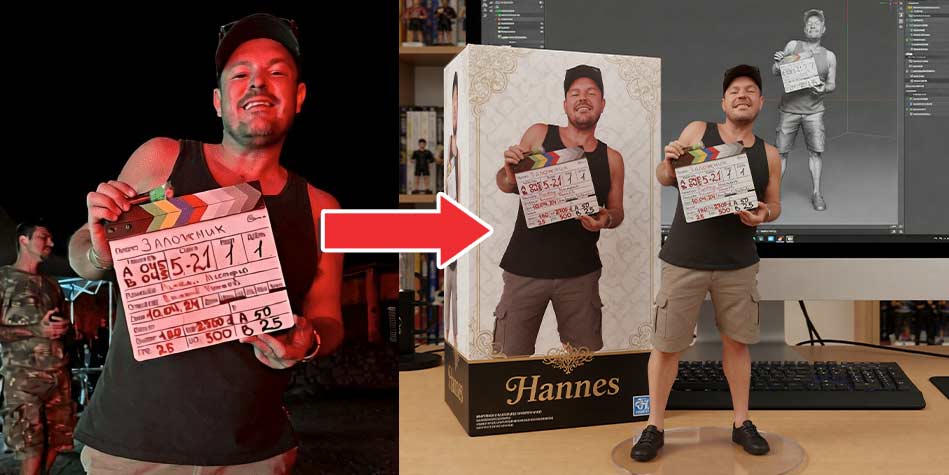
A few years ago, if you’d told me I’d be turning ordinary photos into 3D models and figurines, I’d probably have laughed.
Yet here we are.
Over time I’ve experimented with everything from portraits and cartoon characters to castles, dragons and miniature sculptures. Some worked brilliantly. Others looked like they had escaped from a science-fiction horror movie.
That’s the fun part of working with emerging technology. Sometimes you get exactly what you expected. Sometimes you get something completely different.
Here’s a look at some of the successes, failures and surprises I’ve encountered while exploring the world of photo-to-3D modelling.
Resin Print (UV Screen hardens in the vat, layer by layer)
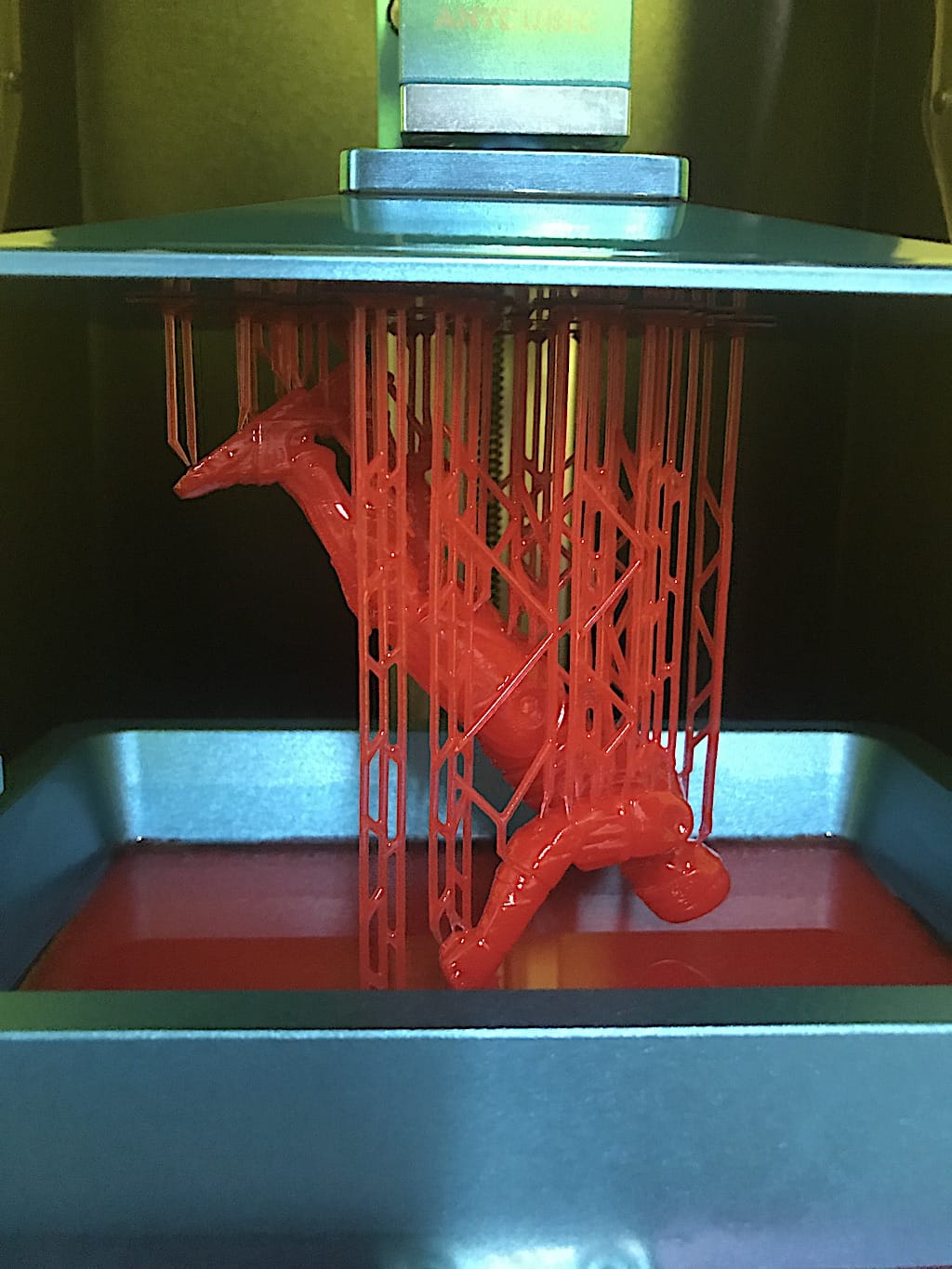
PLA Printing (Plastic is extruded through a heated nozzle, layer by layer)
From the outside, it looks simple. Press print and wait.
In reality, what comes out of the printer is just the starting point.
Not the final product.
Why I Don’t Offer Printing as a Service
Extreme example of PLA print with all its “imperfections”
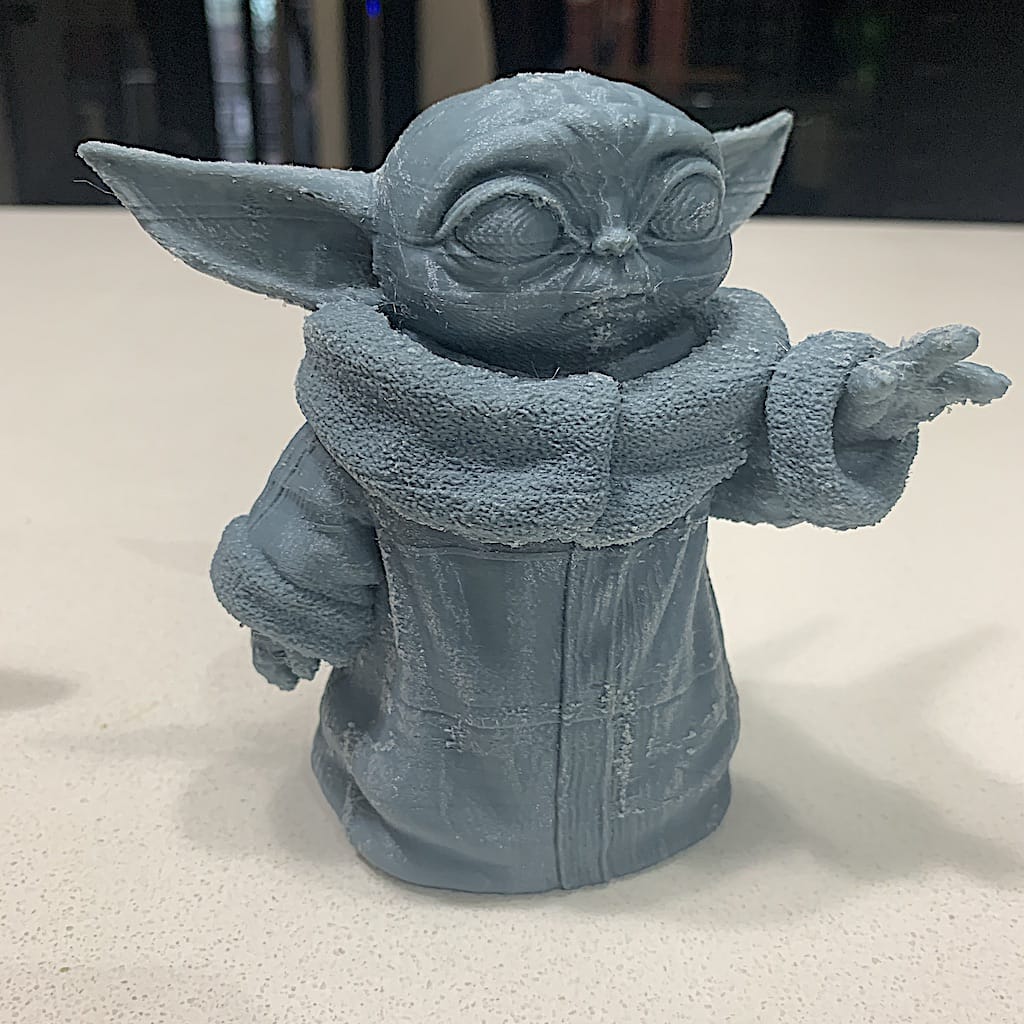
This is a “finished” print.
But it still needs:
- Sanding
- More sanding
- Even more sanding
- Priming
- Painting
PLA printing especially, is where sanding becomes the main job. Not a quick fix. Hours of work. Sometimes days.
And if I had to charge for that time properly… most people would walk away.
I’ve been there. Explaining all of this for 30 to 40 minutes just for someone to say “Wow, that’s a bit expensive”.
So I made a decision.
I focus on the part I actually enjoy and where I add the most value.
What I Actually Offer (And Why It Works Better)
I focus on the part that matters most… the design.
I create:
- High-quality 2D designs which act as a clean preview of your 3D model
- That preview is then used in my own AI workflow to generate a printable base 3D model
That’s the service.
From there, you take the model to a print shop that suits your needs, whether that’s based on budget, material, size or finish.
This approach works better for a few reasons:
- You’re not paying me for days of sanding and post-processing
- You can choose the level of print quality you want
- You can decide the size you want it printed
- You avoid long shipping times for custom pieces
- It works no matter where you are in the world
Simple. Flexible. Faster.
Important: 3D From Photos Is Not Perfect
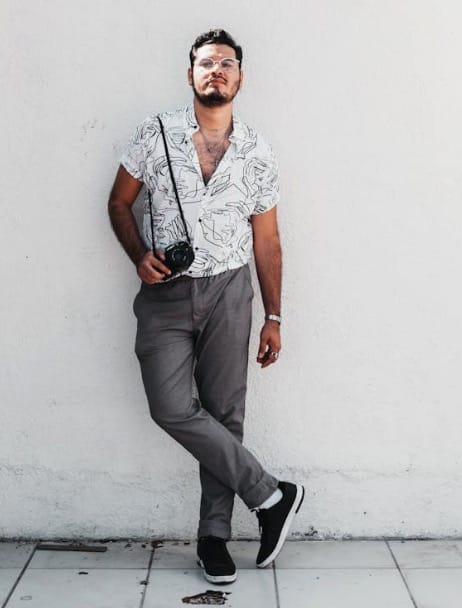
Let’s use this as a real example.
Looks like a great photo, right?
And it is. But when you convert something like this into a figurine, a few things start to happen.
- The pose can affect balance when printed, especially if the weight is uneven
- The shirt texture can’t be printed in colour on most standard printers
- Because it’s a full body image, the face becomes smaller, which means less detail
- Accessories like the camera and strap can distort or lose shape
- Glasses are always tricky and don’t always translate cleanly
- Facial features like the eyes can soften or lose definition
- The face won’t be 100% accurate. For that level of detail, you’d need a full 3D scan
- Thin elements can fail, warp or render poorly depending on the photo.
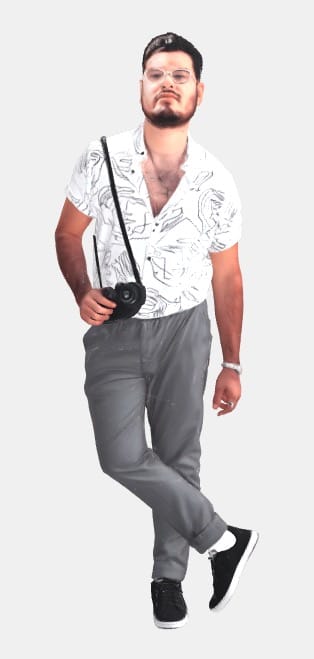
At first glance, the 3D model might look perfect.
But once you rotate it, you start seeing the following:
This is normal.
AI 3D conversion is improving fast but it’s still not perfect. Some results are great. Some are unpredictable.
Why I Prefer Stylised and Simplified Designs
This is exactly why I lean into:
- Simplified figurines
- Busts
- Stylised characters like Simpsons-style
Less complexity in the image means:
- Better conversion to 3D
- Fewer printing issues
- More consistent results
It’s not about doing less. It’s about doing it smarter.
Resin vs PLA (Quick Reality Check)
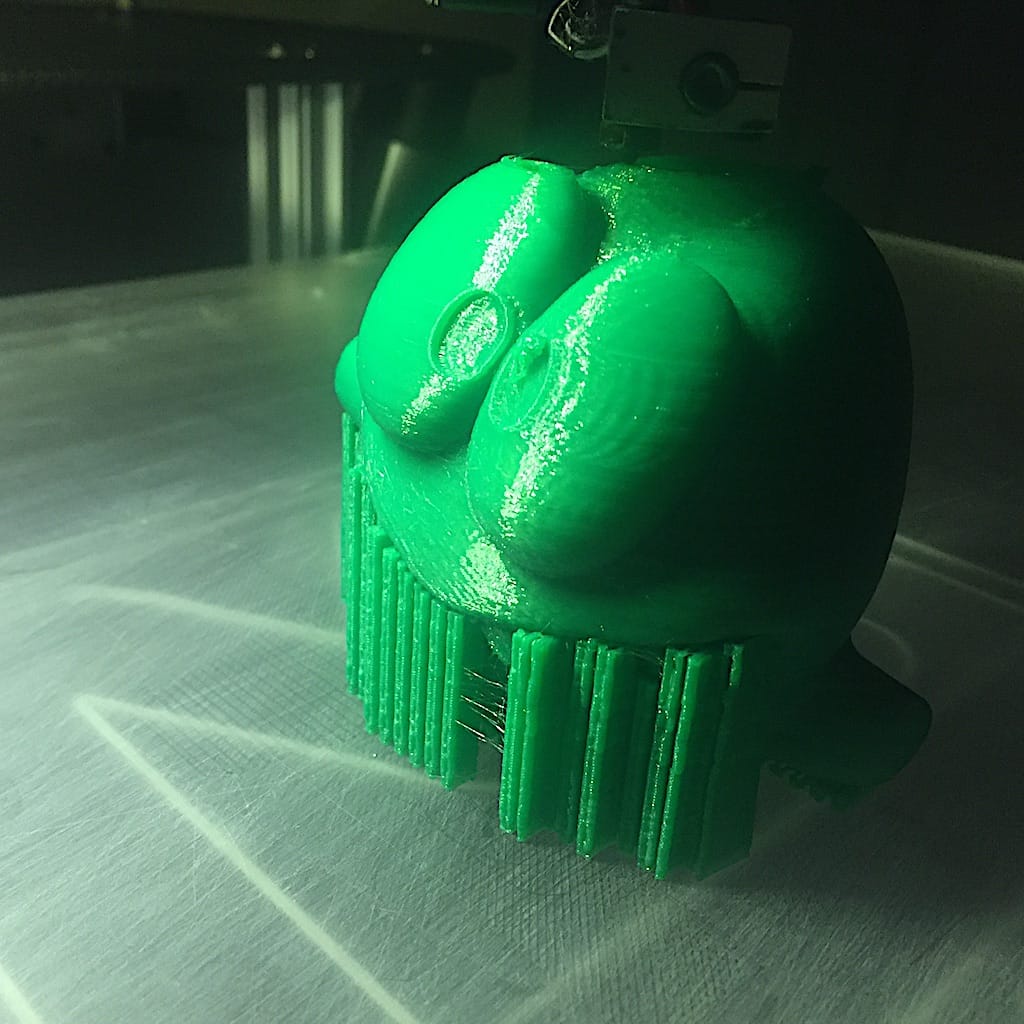
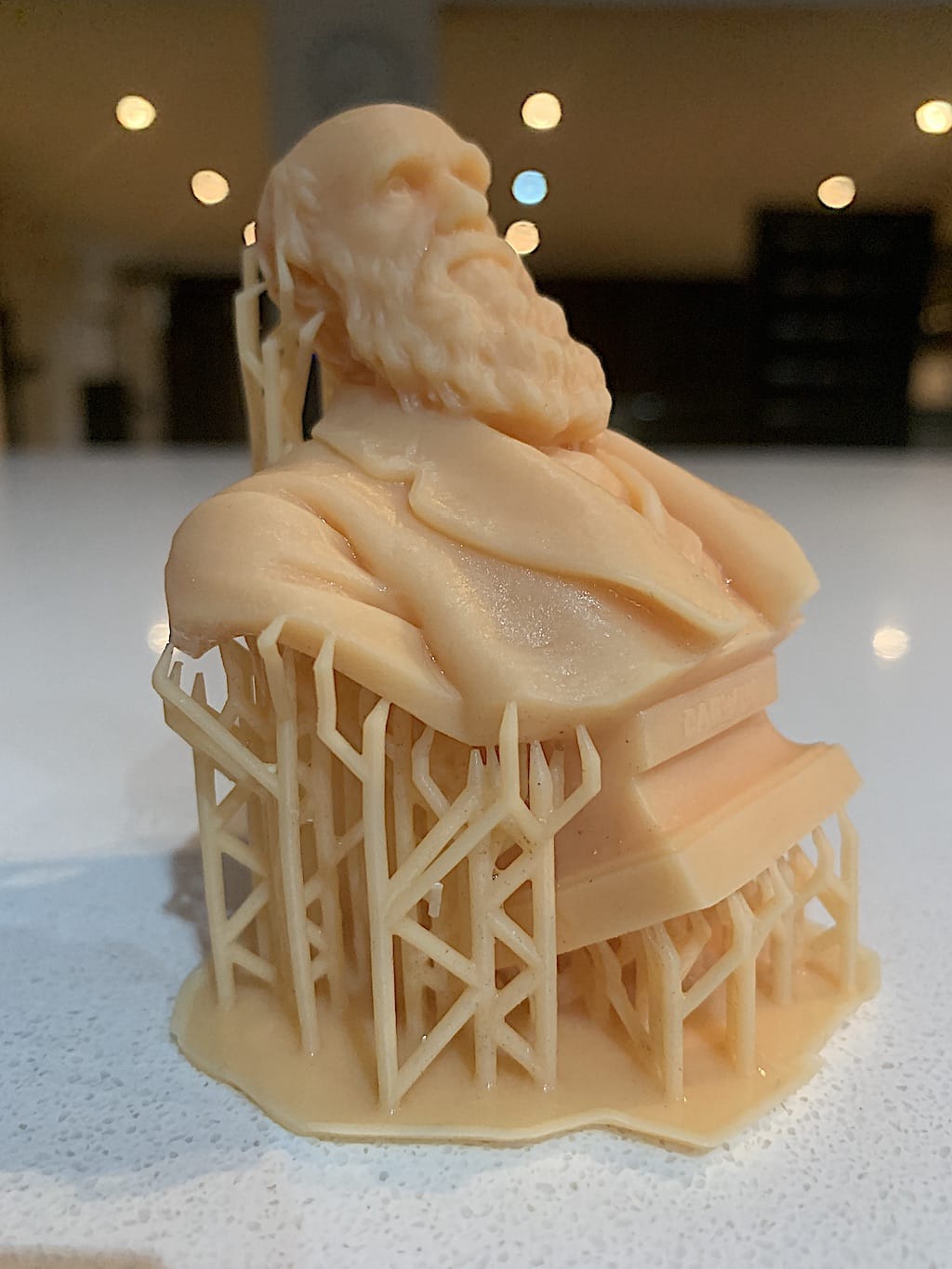
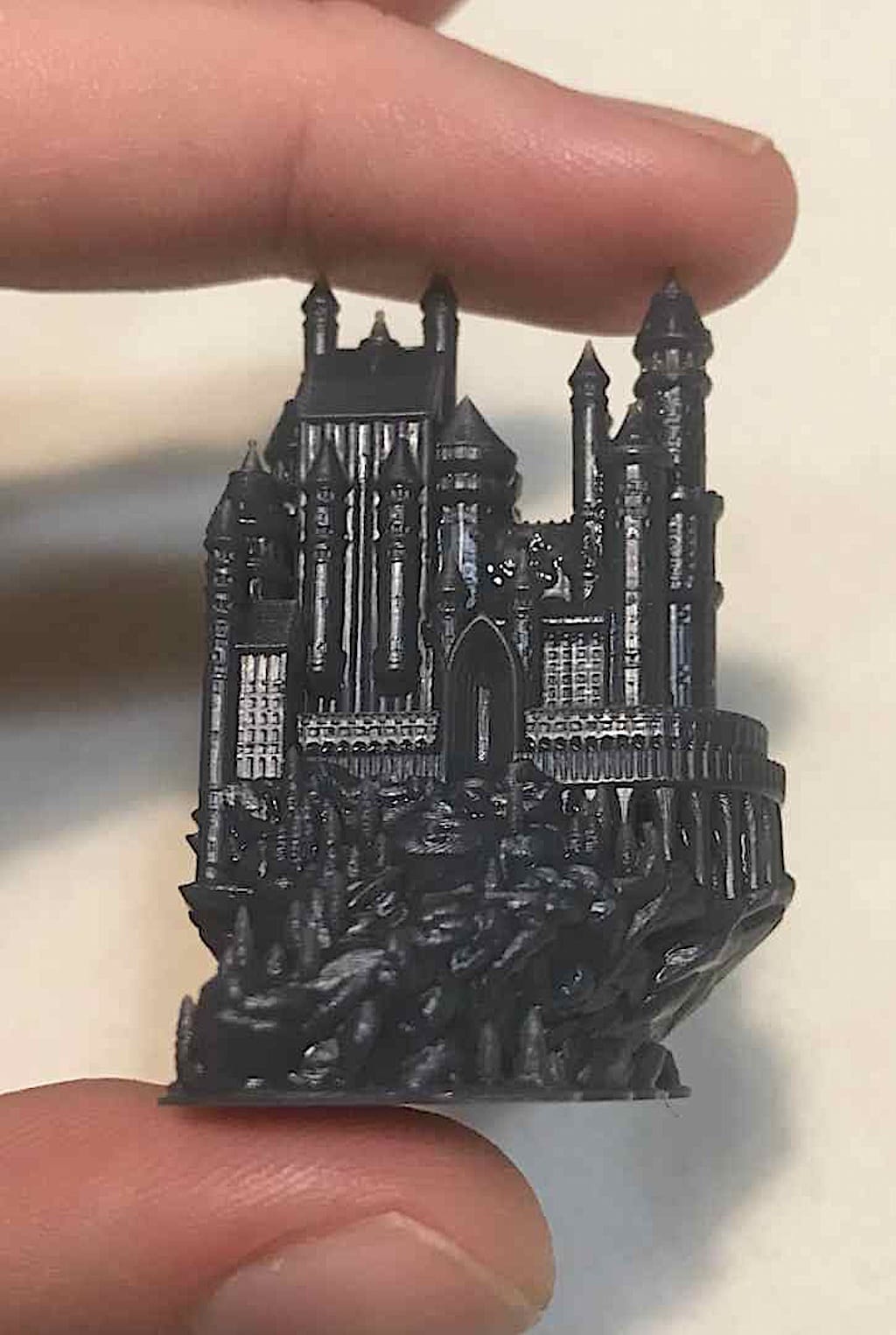
PLA = more sanding
Resin = better detail but more cost, more setup, more care
Both still require post-processing.
There is no version of this that is just “press print and done”.
Scale Changes Everything
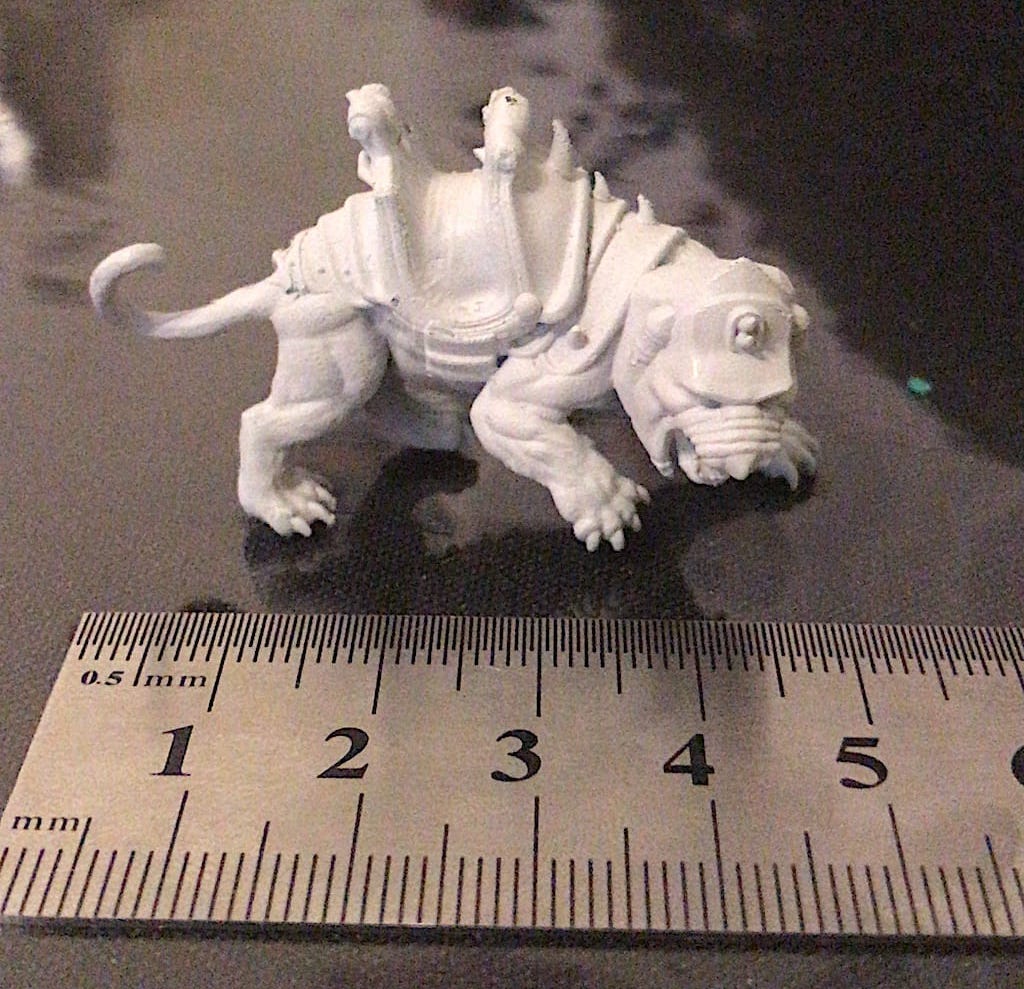
Most figurines are small.
So even if something looks slightly off in 3D, once printed and painted, most people won’t notice.
And that’s important.
Because perfection in this space is expensive.
Most clients don’t need perfection. They want something cool, personal and recognisable.
What a Finished Piece Can Look Like
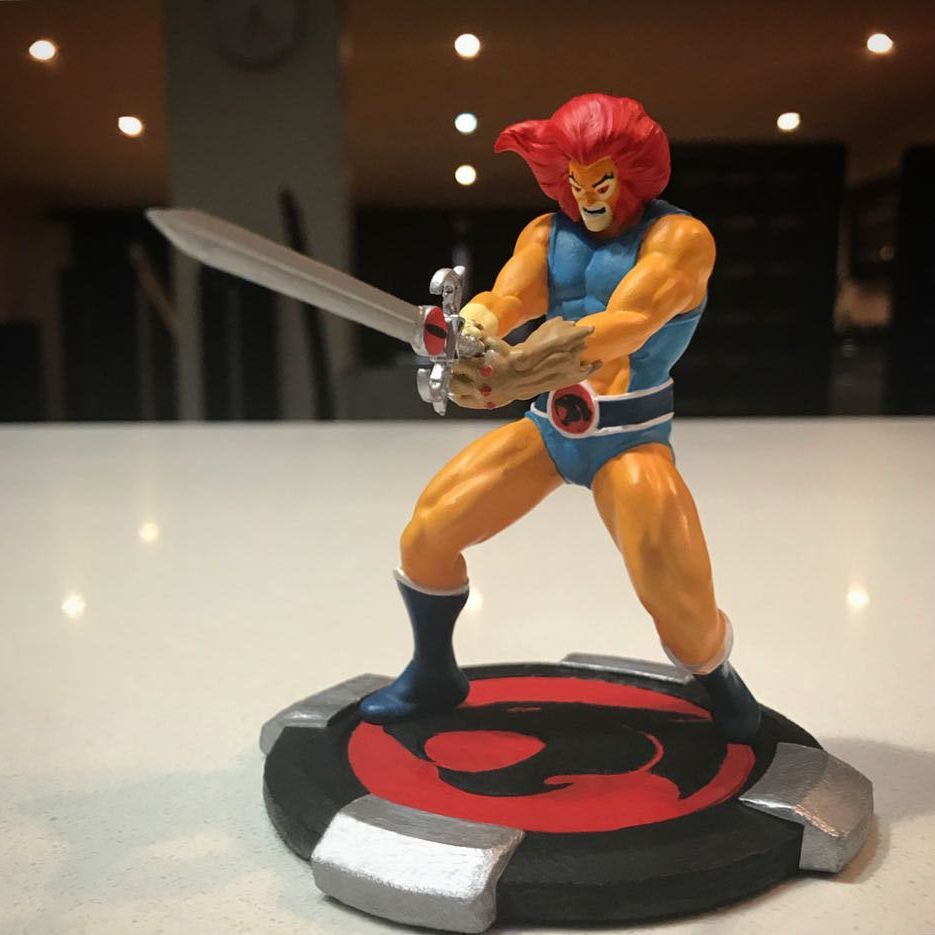
This is what it can become. I used this example because the figurine itself is printed in resin and the base in PLA.
But getting here takes time, effort and skill.
Which is exactly why I don’t offer it as a standard service.
So… How Much Do I Charge?
If you made it this far, you probably still want to know the original question.
Here’s how I handle it.
Send me your photo. I’ll take a look and let you know what’s possible, what style would work best and what kind of result you can expect.
From there, I offer a 3D model preview. This is a paid step.
Why?
Because it’s not a one-click process. I need to:
- Prepare your image
- Run it through my workflow
- Test and refine the result
- Work around the limitations that come with conversion
And like I mentioned earlier, results can vary depending on the photo, pose, detail and complexity.
Once you see the preview, you can decide if you’re happy with it.
If you are, I’ll then quote you for the final 3D model files.
No surprises. No guesswork. You know exactly what you’re getting before committing further.
Final Thought
I’m not here to sell you a physical 3D print.
I’m here to create something worth printing.
I’ll design it. I’ll help generate the model. I’ll guide you on what works best.
Then you take it to a printer that fits your needs. Whether that’s an industrial setup that can handle full colour or a single colour print that you paint yourself.
That way you get the best of both worlds.
And I get to stay focused on what I do best… creating.
 About the Author