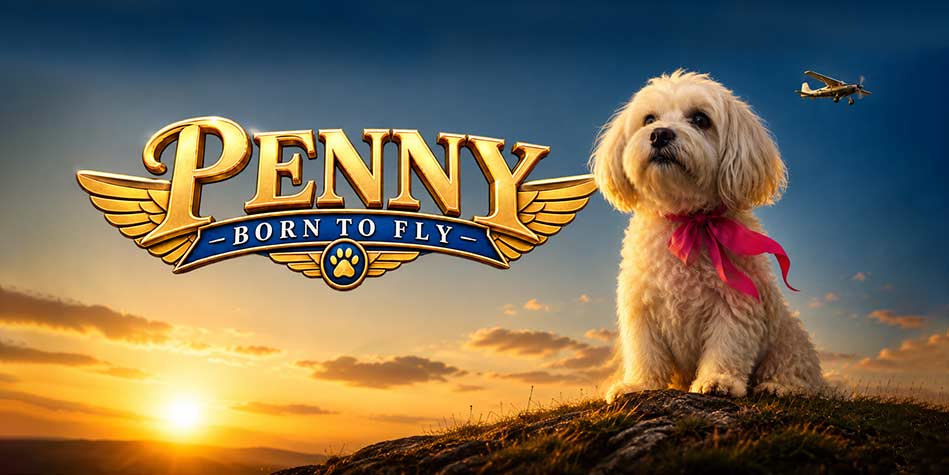
I spent six days making a documentary about my dog becoming a pilot.
This sentence probably raises several questions.
The most important one is obviously: why?
I wanted to see how far AI video had actually come.
Not how impressive a ten-second clip could look on social media. We already know AI can produce individual shots that make you question if it’s real.
I wanted to know whether I could use the latest AI video tools to make something longer. Something with a beginning, a story, visual consistency, sound fx, music and an ending.
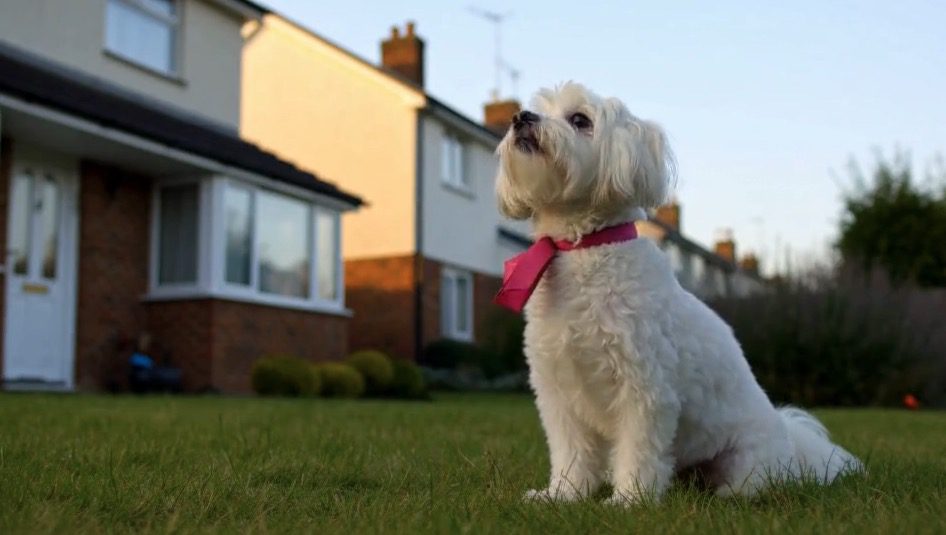
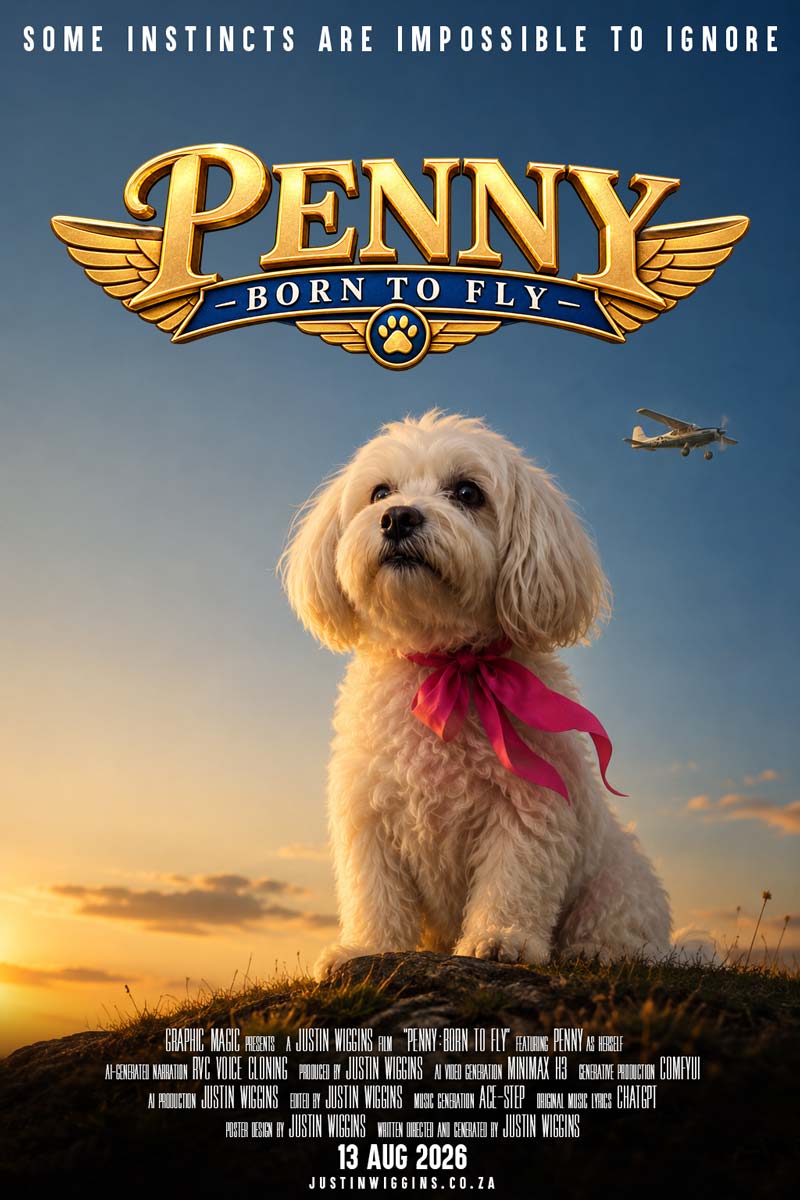
So I gave myself roughly a week, my graphics card and a single image of my Maltese poodle called Penny.
So I ended up with Penny: Born to Fly, a mock nature documentary in which Penny develops an interest in birds, discovers aeroplanes and becomes a professional pilot.
I had six days.
You can watch it here:
I didn’t want to make another AI dog acting like a person
One of the things that pushed me towards this idea was how much AI animal content is already floating around online.
Dogs cooking, dancing or hiding their cellphones when someone walks in.
It was entertaining for the first few days, now there everywhere.
For Penny, I wanted to do almost the opposite and so I made one rule early on:
Penny must remain a dog.
She walks on four legs. She sits like a dog. She looks at things like a dog. She doesn’t suddenly develop opposable thumbs because the screenplay requires her to operate a radio.
If she investigates an aircraft, she can walk around it, look underneath it and sniff the tyres.
I wanted the absurd part to be the world around her.
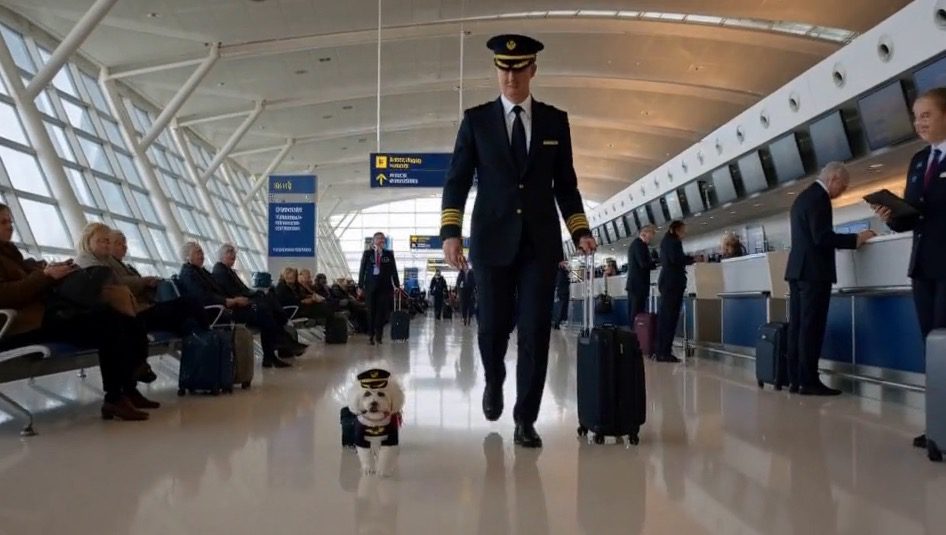
Everyone simply accepts that this small white dog has somehow developed a serious interest in aviation. The more realistically Penny behaved, the funnier I found it.
That became one of the most useful lessons from the whole project.
Realism can make ridiculous ideas funnier
If Penny behaved like a cartoon character, the audience would immediately understand the rules. Anything can happen.
But put a completely normal-looking dog inside a reasonably convincing aircraft cockpit and suddenly your brain starts trying to reconcile two things that clearly shouldn’t belong together.
That tiny bit of believability makes the nonsense work. It also gave me a useful creative constraint. Instead of asking the AI to make Penny perform increasingly complicated human actions, I had to think about how a dog could naturally fit into each scene. Constraints are often surprisingly useful. They force you to solve the actual creative problem rather than just asking the technology to do more.
The experiment was to make it on my own computer, not online models
Most of the video generation was done using ComfyUI, running locally on my own machine.
My GPU is an NVIDIA RTX 3070 with 8 GB of VRAM. Not exactly a secret underground render farm.
I specifically wanted to work locally because part of this experiment was learning how these tools could fit into my actual workflow.
I’m interested in AI because I can use it in my design and creative work, but just knowing that a tool exists isn’t particularly useful.
I want to know where it breaks.
How long does it take? How repeatable is it? How much fixing is required afterwards? Which parts can be automated?
Which parts still need compositing or editing?
And most importantly, how do you get something useful out of it without spending six hours trying to persuade it to do something it may not understand?
These are the things you only learn by actually doing and finishing projects.
AI video doesn’t give you a film
This was probably the biggest lesson.
It gives you pieces of a film.
Most of my generated clips were relatively short and had one specific job.
- Penny approaches an aircraft.
- Another shot shows her examining it.
- Another shows an aircraft taking off.
- Another gives me the reaction I need.
- Another establishes a location.
Then I edit those pieces together and suddenly there is a scene.
The basic workflow ended up looking something like this:
- Write the story and work out what the scene needs to communicate.
- Create images for Penny using the orignal image.
- Generate short video clips with one reasonably clear objective.
- Throw away the generations where physics don’t make sense.
- Regenerate, repair or composite whatever can be saved.
- Edit the successful pieces into a sequence.
- Generate narration, music, ambience, aircraft sounds and other audio.
- Adjust pacing until the scene actually works.
- Repeat this an iunreasonable number of times.
The AI generates movement and imagery.
Editing creates the relationship between those images.
A shot of Penny looking upwards means very little by itself.
Put ad a panning shot upward to birds flying over her head and it creates an idea in the viewer’s mind.
The AI doesn’t understand the joke
This became another interesting part of the process. MiniMax can make pixels move, but it doesn’t necessarily know why I find something funny.
The humour in Born to Fly usually comes from context, restraint and contrast. The documentary starts with the visual language of a serious natural-history film.
Penny watches birds. She studies aircraft. Then, eventually, she is flying much more impressive planes.
If I showed Penny in a fighter jet five seconds into the film, I’d have used the entire joke immediately.
Protecting that reveal was a storytelling decision, not a prompting decision. The same applied throughout the film.
Just because AI makes it possible to show something spectacular doesn’t mean you should show it yet.
I actually removed several ideas because they were getting in the way of the story. AI makes it incredibly tempting to keep asking:
“What else can I generate?”
The more useful question is often:
“Do I actually need this shot?”
Test screenings still matter, even when your actors are generated
Another useful lesson came from something that had nothing to do with prompts, models or graphics cards. Before I considered the film finished, I showed it to my girlfriend.
Towards the end of the film, cats start flying helicopters and Penny responds in the only sensible way possible by acquiring a fighter jet. A few of the helicopters get shot down.
I thought it was funny. My girlfriend’s reaction was slightly different. She didn’t like the idea of the cats being blown out of the sky.
Of course, I knew no real cats were involved. No cats had even been mildly inconvenienced during production. But that wasn’t really the point.
She was watching it as an audience member rather than as the person who had spent six days assembling the thing. Once she mentioned it, I completely understood what she meant.
So I changed the ending. I added a cat safely descending with a parachute during the credits, which makes it clear that our feline helicopter pilots survived their unfortunate encounter with Penny’s rapidly escalating aviation career.
I also hid a much smaller parachuting cat earlier in the action sequence.
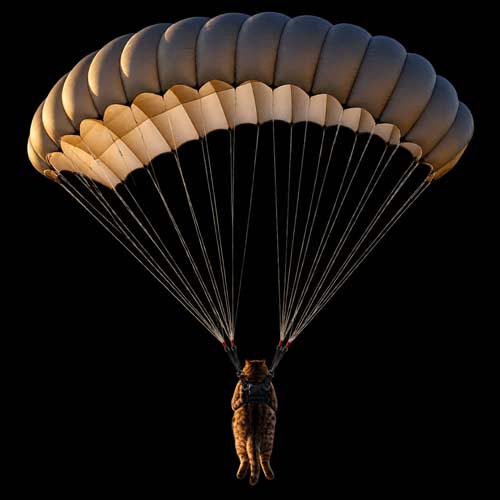
Blink and you’ll probably miss it.
What made this particularly interesting was that somebody later commented on the finished video saying they had initially been worried about the cats, but the credits resolved it for them. That was exactly the reaction my girlfriend had predicted.
It was a useful reminder that when you’ve been working on something for days, you know every intention behind every shot. The audience doesn’t. You might know a joke is harmless. You might understand why a scene is there. You might have watched the same edit fifty times and stopped noticing something entirely.
Then somebody sees it once and immediately spots a problem you hadn’t considered. That outside perspective can be incredibly useful.
There’s a reason Hollywood has been doing test screenings for decades. So even a seven-minute AI documentary about a poodle fighter pilot benefits from market research.
Consistency is much harder than spectacle
Generating one beautiful AI video is becoming surprisingly easyGenerating thirty or forty shots that look like they belong in the same film is much harder.
Penny needs to remain recognisably Penny. Aircraft need to make visual sense. Cockpits shouldn’t completely redesign themselves every time the camera changes angle. So from the “first generation of a plane” I liked. I used that as a reference for the other shots.
At one point I found myself spending far too much time making sure a rocket was travelling in the correct direction underneath the wing of a fighter jet being flown by my dog.
There is probably a sentence my younger self never expected to write. And yet these small details matter.
Audiences are surprisingly forgiving of an impossible premise. A dog flying an aircraft? Fine. A cockpit with a window that makes absolutely no physical sense? Now we’ve gone too far.
Not every mistake is worth fixing
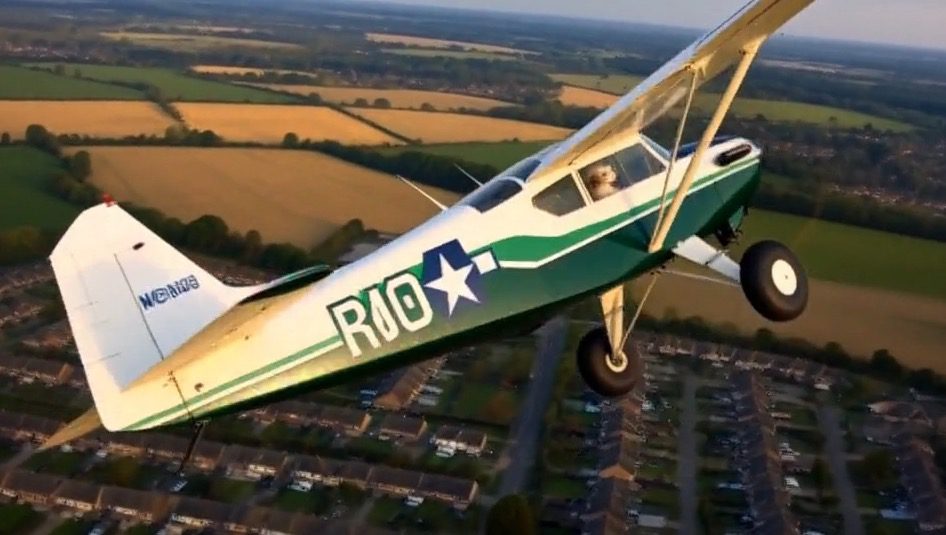
You’ll still see imperfections in the finished film. Some lettering on aircraft becomes classic AI hieroglyphics. There are little continuity differences. Some lighting could match better.
A few shots could undoubtedly be improved if I generated them another twenty times. I know they’re there.
The question was whether fixing each one was worth the time.
This project had a deadline because I wanted to answer a specific question:
What can I make in roughly one week with the hardware and tools I have right now?
If I’d given myself another week, the film would be better.
Give me a month and I could keep polishing it.
I could replace questionable shots, correct every bit of lettering, manually composite more elements and spend considerably more time matching colour and lighting.
But then I’d be answering a different question. This is something that applies well beyond AI.
There is always one more thing you can fix.
Professional creative work often involves knowing the difference between something that genuinely damages the result and something only the person who made it will notice while staring at frame 4,327 at 2am.
Finishing is also a skill. Knowing when to step away.
720p isn’t just about resolution
I generated most of the footage at 720p. Could I push things further? Yes.
Would I like every source clip generated beautifully at higher resolution? Of course.
My graphics card would also like to file a formal complaint.
Higher resolution means longer generations, more VRAM pressure and much slower iteration. And that revealed something I think gets overlooked when people compare AI video models.
Speed is part of creative quality.
Imagine Model A creates slightly prettier footage but takes four times longer than Model B. On paper, Model A might be better, but with Model B I can try four different ideas. I can test another camera angle. I can reject something mediocre. I can experiment. I can discover a better solution that I wouldn’t have attempted if every generation took forever.
Faster generation doesn’t simply save time. It gives you more creative attempts within the same amount of time. That matters enormously.
Reference images became part of directing
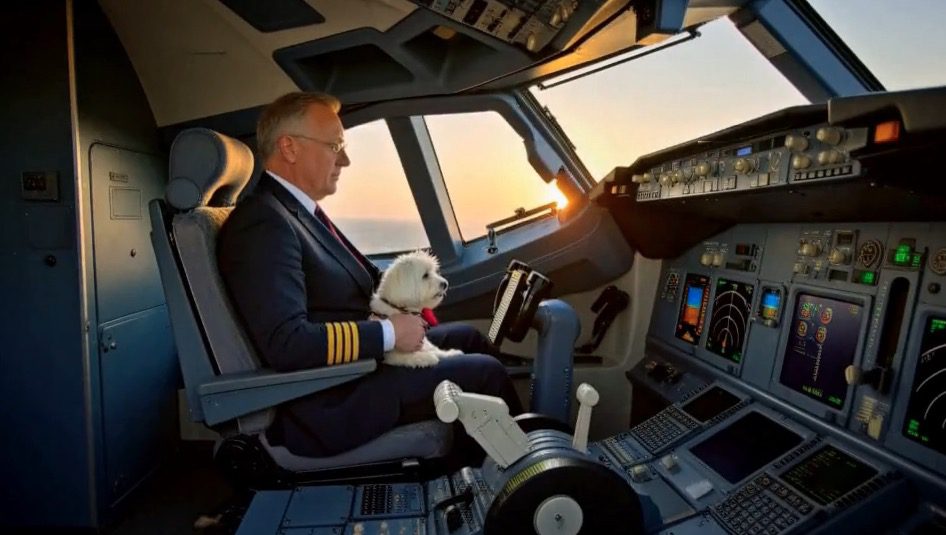
Another big lesson was how important the starting image is. I frequently generated and edited still images before generating any movement.
That gave me control over things such as Penny’s position, the aircraft, cockpit layout, camera angle and environment.
Sometimes I generated an image. Sometimes I rebuilt parts of it. Sometimes I removed something. Sometimes I replaced one successful element instead of regenerating the whole scene.
If you’ve got an image that’s 90 percent correct, generating the entire thing again because one cat is the wrong size can be a terrible strategy.
Just fix the cat.
AI image generation, traditional image editing and compositing all started blending together during this project. Rather than replacing older tools, the AI became another tool sitting beside them.
Prompting is only one part of the job
There’s a funny perception around AI content that someone types a magical sentence and the finished thing arrives.
I wish.
Prompts mattered, obviously, but so did:
writing, directing, reference creation, image editing, compositing, animation choices, video editing, sound design, narration, music, graphic design, pacing and knowing when to stop generating things.
The finished film came from all of those decisions working together. This is probably why I’m less interested in becoming a “prompt expert” than I am in understanding how these tools fit into a larger creative workflow.
Prompts will change. Models will change. Interfaces will become easier. Many of the strange technical rituals we’re performing today will probably look hilarious in a few years.
Knowing why a shot works is more durable.
Six days also taught me more than months of casually testing tools
I’ve played with plenty of AI models by generating images or clips. That’s useful for understanding what something can do. It doesn’t really teach you production.
The problems only reveal themselves once you try to build something longer. Suddenly character consistency matters, you need a shot that isn’t exciting, but connects two scenes or you need the same aircraft from another angle or that gorgeous generation is completely useless because Penny tail is looks a little small for the edit.
Finishing something forces you to stop treating each generation as an individual piece of art. It becomes material. Some of it is excellent. Some of it gets repaired or hidden behind a cut. Or somesome of it gets deleted.
That mindset made me much more productive with the technology.
We’re still very early
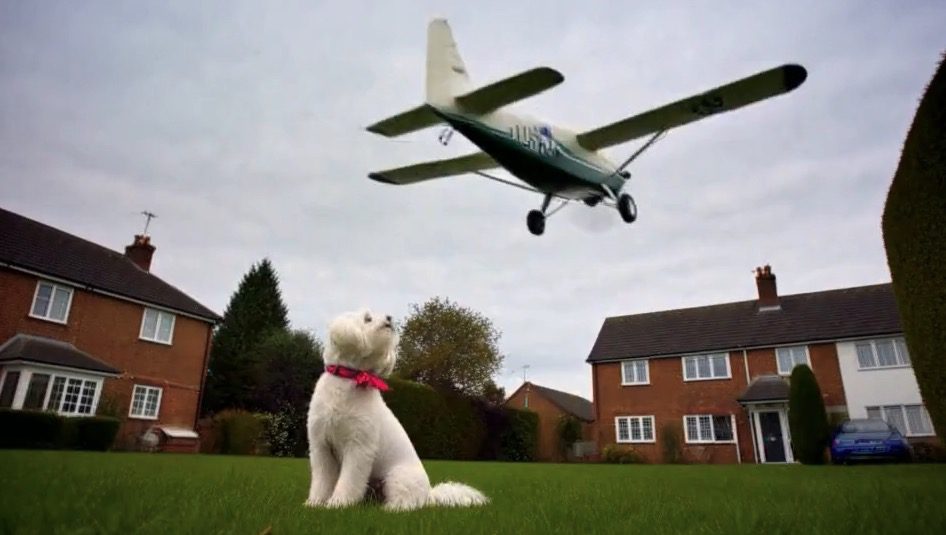
What I find slightly ridiculous is how quickly all of this is changing. I made Penny: Born to Fly locally on a consumer graphics card.
There were limitations. Render times mattered. Resolution mattered. VRAM mattered.
My GPU temperature definitely mattered.
But those limits aren’t standing still. Models are becoming better, faster and more controllable at a ridiculous pace. Things I spent an afternoon solving during this project may simply become buttons.
Things that currently require a powerful desktop machine may eventually happen on our phones.
That doesn’t mean everybody suddenly becomes a filmmaker. Everyone already has a camera in their pocket. That didn’t turn every person with an iPhone into Steven Spielberg.
What it did was remove one of the barriers. AI is removing another.
And then things get a little strange
Someone commented on Reddit on my video and said that this felt like “a new era of filmmaking.” I think there will probably be several stages before we understand what this actually becomes. Right now we’re moving into a period where more people can generate convincing video without access to cameras, actors, sets, helicopters, fighter jets or fortunately for aviation authorities, a licensed poodle.
Eventually the technical barrier may become extremely small. At that point the question gets more interesting.
What happens when convincing generated video becomes completely normal? What happens when professional-looking fictional footage becomes available to anyone with a device?
And what happens when visual realism is no longer a useful indication that something actually happened? We may reach a strange point where the internet becomes increasingly visual while individual images and videos become less trustworthy as evidence.
Ironically, Penny: Born to Fly is a very safe demonstration of that problem. Hopefully nobody watches it and concludes that South African aviation regulations have recently become extremely relaxed.
But the underlying technology won’t always be used to show something so obviously ridiculous. That’s a much bigger conversation than one film about my dog.
So what did I actually learn?
The biggest takeaway isn’t that AI can make a dog appear to fly an aeroplane. That part is almost becoming ordinary.
What interested me was discovering how much work still exists between generating something and making something. Those are not the same thing.
The tools gave me footage I could never realistically have shot myself. But they didn’t decide what the story should be. They didn’t decide that Penny should remain physically dog-like. They didn’t know when the joke had gone too far. They didn’t choose the edit or decide which mistakes mattered. They didn’t know which beautiful shots belonged in the bin and they certainly didn’t decide that the only logical response to cats acquiring helicopters was to give Penny a fighter jet.
That was me (for now, at least).
I made the whole thing in six days, learnt a ridiculous amount, pushed my graphics card considerably harder than Penny has ever pushed herself and came away with a much better understanding of where AI video is useful today.
I’ll definitely be making more strange experiments like this. So follow me below on YouTube.
 About the Author